In a nutshell
- 🍋 A lemon wedge transforms shower grime in 3 minutes, with citric acid dissolving limescale and soap scum while the rind adds gentle abrasion and oils lift residues.
- ⏱️ Three-Minute Method: warm surfaces, swipe on juice then rind in overlapping arcs, wait ~90 seconds, rinse warm, and buff with a microfibre cloth for a streak-free finish.
- 🛡️ Safe vs. avoid: suitable for tempered glass, glazed tiles, chrome, and stainless; avoid natural stone, unlacquered brass, anodised aluminium, and damaged plating; never mix with bleach.
- 💷 Cost & safety: about £0.10–£0.25 per clean with low odour; wear gloves if skin-sensitive and rinse residues to prevent stickiness; minimal ventilation needed.
- 🔁 Routine upkeep: quick weekly passes in hard-water areas prevent buildup, cut deep-clean time, and keep taps and glass sparkling with less effort.
Shower glass fogged with scum, chrome dulled by limescale, grout looking tired—most of us resign ourselves to scrub, spray, repeat. There’s an easier fix hiding in your fruit bowl. A simple lemon wedge can transform grime in three minutes, delivering sparkling glass and refreshed metalwork with almost no effort. The secret lies in its chemistry and texture: natural acid, gentle oils, and an inbuilt soft scourer. It’s fast. It’s cheap. It’s low odour. And for quick maintenance cleans, it often beats harsh products without the sting to your lungs or your wallet. Here’s how the trick works, why it’s so effective, and the surfaces to choose—or avoid—when you put citrus to work.
Why a Lemon Wedge Cuts Through Grime in Minutes
At the heart of lemon’s cleaning power is citric acid, a weak organic acid with a talent for dissolving limescale. Scale is mainly calcium carbonate. Citric acid chelates calcium ions, breaking down those chalky deposits that cloud glass and cling to taps. That same acidity also tackles soap scum—the stubborn film formed when fatty acids in soap bond with minerals in hard water—by disrupting the bonds and loosening the residue. Give the surface a short, focused contact time, and the chemistry does the heavy lifting while you watch the dullness lift.
The lemon’s rind adds gentle abrasion. Not sandpaper, but a fine, pith-cushioned texture that helps nudge softened deposits free without scratching glazed tile or tempered glass. Meanwhile, natural citrus oils act like a light solvent to lift body oils and shampoo residues, leaving a streak-minimising sheen. The pH, typically around 2–2.5, is strong enough for quick action but mild enough for controlled use on many bathroom finishes. That’s why a “three-minute clean” is feasible: the acid loosens, the rind agitates, and a quick rinse completes the reveal.
The Three-Minute Method: Step-by-Step
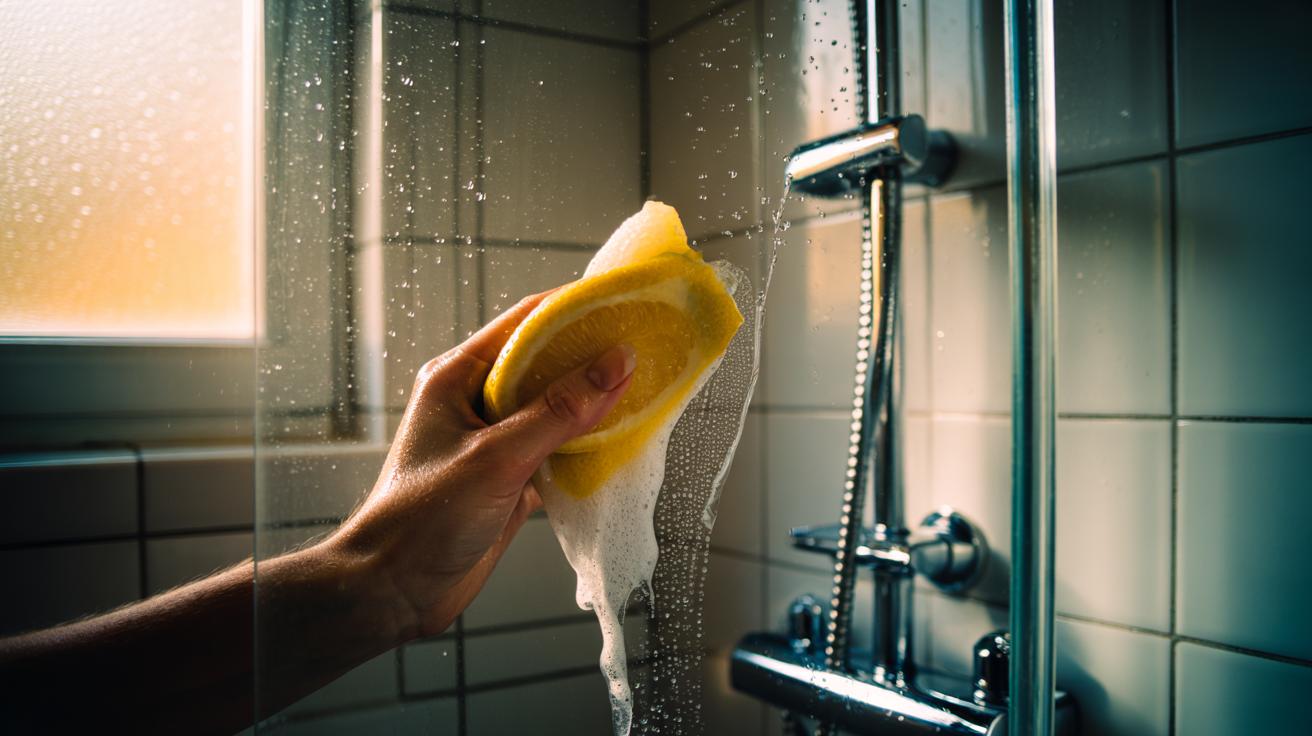
First, run the shower briefly on warm. Not hot. The warmth softens scum and opens the microscopic pores on glass and tile, improving contact. Cut a fresh lemon wedge—a firm, juicy quarter works best. Switch off the water. Squeeze the wedge just enough to wet the surface, then use slow, overlapping arcs across glass, chrome, and ceramic. You’re painting with juice, not scrubbing. On heavy deposits, press the rind side gently for a mild scour. Target edges, lower door panels, and tap bases where limescale blooms fastest.
Let it sit for two to three minutes. Use the pause to wipe silicone seals and the shower head faceplate—briefly, not a soak. Rinse thoroughly with warm water, then buff dry with a microfibre cloth for a streak-free finish. Any citrus pulp? Swipe it away as you buff. For a quick reference, use the simple guide below and repeat weekly in hard-water homes.
| Step | Action | Time | Tip |
|---|---|---|---|
| 1 | Warm surfaces | 30 sec | Short, gentle rinse |
| 2 | Apply lemon | 60 sec | Juice then rind for light scour |
| 3 | Wait | 90 sec | Hands off—let acid work |
| 4 | Rinse and buff | 30 sec | Microfibre prevents streaks |
What You Can Clean—and What to Avoid
On the safe list: tempered glass doors, glazed ceramic tiles, chrome-plated taps, and stainless-steel drains. These surfaces handle brief acid contact well, especially when rinsed promptly and dried. Lightly discoloured grout often brightens as soap scum dissolves, though grout won’t become snow-white without deeper treatment. Silicone seals? A quick pass is fine; avoid long soaks to protect elasticity. If you’re unsure, test the lemon on an inconspicuous corner and rinse within sixty seconds.
Skip: natural stone such as marble, limestone, and travertine—the acid etches, leaving dull patches you cannot buff out. Be cautious with unlacquered brass, anodised aluminium, and worn chrome where the plating is compromised. Painted trims and specialty coatings can stain or lift under acid. Never mix lemon with bleach or strong alkalis; chemical cocktails are unpredictable and unsafe. If heavy mineral crust persists on a shower head, remove it and soak the component in a diluted descaler or white vinegar offsite, then rinse thoroughly before refitting. Respect the surface and the method stays wonderfully simple—and surprisingly powerful.
Cost, Safety, and Sustainability at a Glance
A lemon wedge is a rare hat-trick: low-cost, low-tox, and high-impact. One lemon yields multiple cleans, with minimal packaging and a fresh scent that dissipates quickly. Ventilation helps, but you won’t need a mask. Skin-sensitive? Wear washing-up gloves; acids can sting micro-cuts. And always rinse handles and floors—citric residue is sticky and may attract grime if left behind. For clarity, compare common options below.
| Option | Typical Cost per Clean (UK) | Odour | Ventilation Needed | Surface Risk | Eco Footprint |
|---|---|---|---|---|---|
| Lemon wedge | £0.10–£0.25 | Fresh, light | Low | Stone/soft metals | Low |
| White vinegar | £0.05–£0.15 | Sharp, lingering | Moderate | Stone/soft metals | Low |
| Commercial descaler | £0.30–£0.80 | Chemical | High | Finish damage if misused | Medium |
Vinegar works; it’s excellent for limescale. But its odour can linger in small bathrooms, and many prefer citrus. Descalers blitz heavy crust quickly, yet demand care, ventilation, and careful reading of labels. For routine upkeep, a lemon’s three-minute touch-up keeps grime at bay so deep cleans become rare, not dreaded.
Here’s the unexpected win: turning to a lemon wedge shifts your routine from brute force to smart chemistry, from weekend chores to a minute after your morning rinse. It’s tactile, almost satisfying—the squeak of clean glass, the sparkle of taps, the scent that says fresh without shouting. Consistency is the trick; little and often beats occasional battles. Will you try the three-minute citrus sweep this week and see what changes first—the shine in your shower, or the time you save? What’s the one surface you’re most curious to test with a lemon today?
Did you like it?4.6/5 (20)