In a nutshell
- 🍋 Quick revival: Restore wooden furniture’s natural shine in 5 minutes using a 1:2 lemon juice–to–oil mix; work with the grain using a microfibre cloth and buff dry.
- 🧪 Safety & compatibility: Suitable for polyurethane, varnish, hard-wax oil, and lacquer; use caution on shellac/French polish, avoid bare wood, and keep acids off stone/metal; always patch-test.
- 🧼 Step-by-step: Mix 1 tbsp lemon juice + 2 tbsp olive/mineral oil (optional drop of washing-up liquid), apply whisper-thin, clean edges and handles first, then buff to a satiny feel.
- 🌿 What it does: Citric acid lifts grease and haze, oil reconditions the topcoat, revealing richer colour and deeper grain without stripping the finish.
- ⚠️ Pro tips: Keep cloth barely moist; never leave surfaces wet; reduce lemon if streaking, or add a pea-sized mineral oil top-up if wood looks parched; refresh monthly.
Five minutes. That’s all it takes to coax back the honeyed glow of tired tables and scuffed sideboards, using nothing more than kitchen staples. As a home-friendly polish and micro-cleaner, lemon juice cuts through greasy fingerprints, clouded residue, and day-to-day dust, while a splash of nourishing oil restores a supple, low-sheen lustre. The trick is balance: mild acidity to cleanse, a light oil to condition, and gentle pressure to protect the finish. Always test on a hidden patch first. With the right ratio and technique, you can revive natural shine between deep cleans, saving time, money, and patience.
Why Lemon Juice Revives Tired Timber
Citric acid in lemon juice has a low pH and acts like a delicate solvent for grime. It loosens skin oils, airborne grease, and the hazy film left by old polishes without biting aggressively into a modern varnish. It also chelates mineral specks, the tiny hard flecks from tap water and dust, which dull the surface. The result is a brighter, clearer finish. Pairing that brightness with oil matters: lemon lifts the haze; oil returns the supple gleam wood craves.
A 1:2 blend of lemon juice to olive oil or a neutral mineral oil is a happy medium. The acid loosens residue; the oil replenishes micro-dryness and improves light diffusion, so grain looks deeper and richer. Done right, you’re not stripping anything. You’re refreshing the uppermost film and reconditioning the topcoat so it reflects light more evenly. Use a soft microfibre cloth and work with the grain to avoid drag marks.
Caveats? Dark, tannin-rich woods — walnut, oak — can react if left wet with acid. Older shellac and delicate French polish soften easily. Never apply neat lemon to antique shellac or raw timber. On sturdy polyurethane, lacquer, and hard-wax oil, the technique is typically safe when sparing and promptly buffed dry.
Five-Minute Method: From Dull to Dazzle
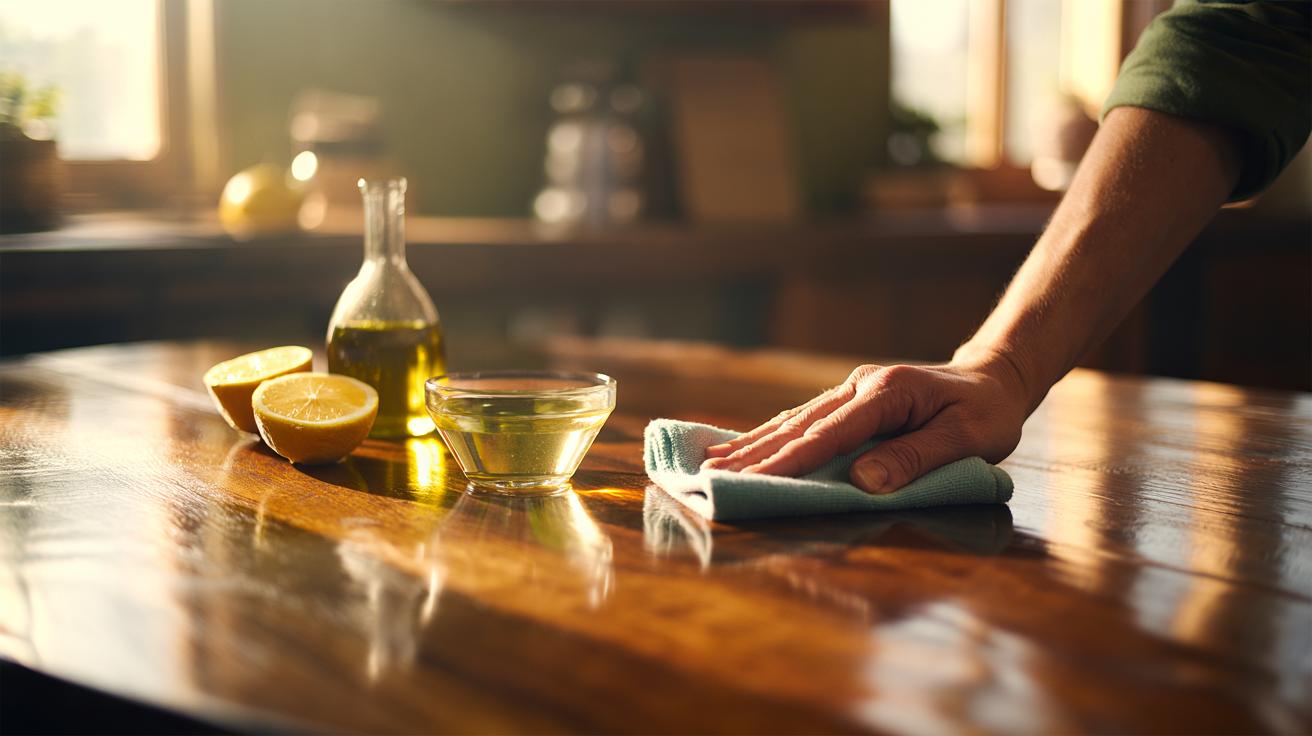
Set a timer. Squeeze one tablespoon of fresh lemon juice into a small bowl and stir in two tablespoons of olive oil (or food-safe mineral oil). If the surface is especially grubby, add a single drop of mild washing-up liquid — no more. Lightly dampen a clean microfibre cloth in warm water, wring hard, then dip a corner into the mixture. The cloth should be barely moist, not slick.
Start at a rear corner and work in the direction of the grain, using small, overlapping strokes. Skirting edges and handles first stops smears. Move briskly across the top, then over legs and rails. The aim is whisper-thin coverage: cleanse, then condition. Any stubborn smear — cup-ring haze, sticky patch — gets a second pass with slightly more pressure, still feather-light. Use a cotton bud on beading and in joints so oil doesn’t pool.
Now buff. Switch to a dry cloth and polish until the surface feels satiny, not tacky. You’re lifting surplus oil and leaving a sheer film that catches the light. The whole sequence is quick: about one minute to mix, two minutes to apply, ninety seconds to buff, and thirty seconds for spot tidying. Work fast and light; the finish should never look wet. The payoff is immediate: a low, even sheen; clearer colour; grain that suddenly looks three-dimensional.
Safety, Compatibility, and Long-Term Care
Not all finishes are equal. The more robust the topcoat, the more forgiving the method. The more traditional the finish, the gentler you must be. Keep acids far from stone inlays, iron fittings, and marble-topped washstands — lemon will etch them. Ventilate, and never drench timber; moisture is the enemy. As a rule, refresh high-traffic furniture monthly, and reserve heavier polishes or waxes for seasonal care. If in doubt, patch-test for 60 seconds, buff dry, and check for dulling or colour lift.
| Finish Type | Lemon Suitability | Notes |
|---|---|---|
| Polyurethane/Varnish | Yes | Use 1:2 lemon-to-oil, wipe thinly, buff promptly. |
| Hard Wax Oil/Oiled | Ideal | Revives lustre; avoid saturating edges and end grain. |
| Lacquer | Generally | Safe with a light hand; never leave acidic residue. |
| Shellac/French Polish | Caution | Test first; consider oil-only buff for antiques. |
| Unfinished/Bare Wood | No | Acid can raise grain and spot-stain. |
| Painted/Enamel | Limited | Wipe and buff only; avoid oil build-up. |
Always patch-test and keep acids away from stone and raw metal. Store any leftover mixture in a labelled jar for up to 24 hours, then discard; fresh is best. If you spot streaking, reduce the lemon ratio or buff longer. If the wood still looks parched, follow with a pea-sized measure of pure mineral oil and a final buff to seal in that magazine-ready sheen.
A simple squeeze of lemon and a whisper of oil can transform dull furniture into something you’re proud to run a hand across. It’s fast. It’s frugal. It’s kind to most finishes when you follow the rules: light touch, correct ratio, and a disciplined buff. The reward is an instantly cleaner surface and a richer, truer colour. Whether it’s a mid-century sideboard or a pine kitchen table, this five-minute rescue brings back life without fuss or fumes. Which piece in your home is begging for a quick lemon-and-oil revival today?
Did you like it?4.3/5 (21)