In a nutshell
- ✨ Why it works: A crumpled aluminium foil ball gently burnishes tougher stainless steel, using micro-edges and trace aluminium oxide to lift films and grime with fewer scratches when you follow the grain.
- ⏱️ 3-minute method: Crumple foil, add warm water and washing-up liquid (or bicarbonate), rub in grain-aware strokes, rinse often, and finish with microfibre; for limescale, use diluted vinegar first—never mix with bleach.
- 🧰 Foil vs scrubbers: Faster than plastic pads, gentler than steel wool, and cheaper per use; offers better control, conforms to curves, and pairs well with a microfibre buff and a drop of mineral oil on appliances.
- ⚠️ Caveats: Avoid on non-stick, enamel, lacquered or printed finishes, anodised aluminium, and seasoned cast iron; test discreetly, use light pressure on mirror polish, wear gloves, and recycle clean foil where accepted.
- 🧪 The science of shine: Foil reduces surface roughness (Ra), restoring specular reflection; surfactants release oils from the passive layer so the surface looks clearer and brighter in fewer passes.
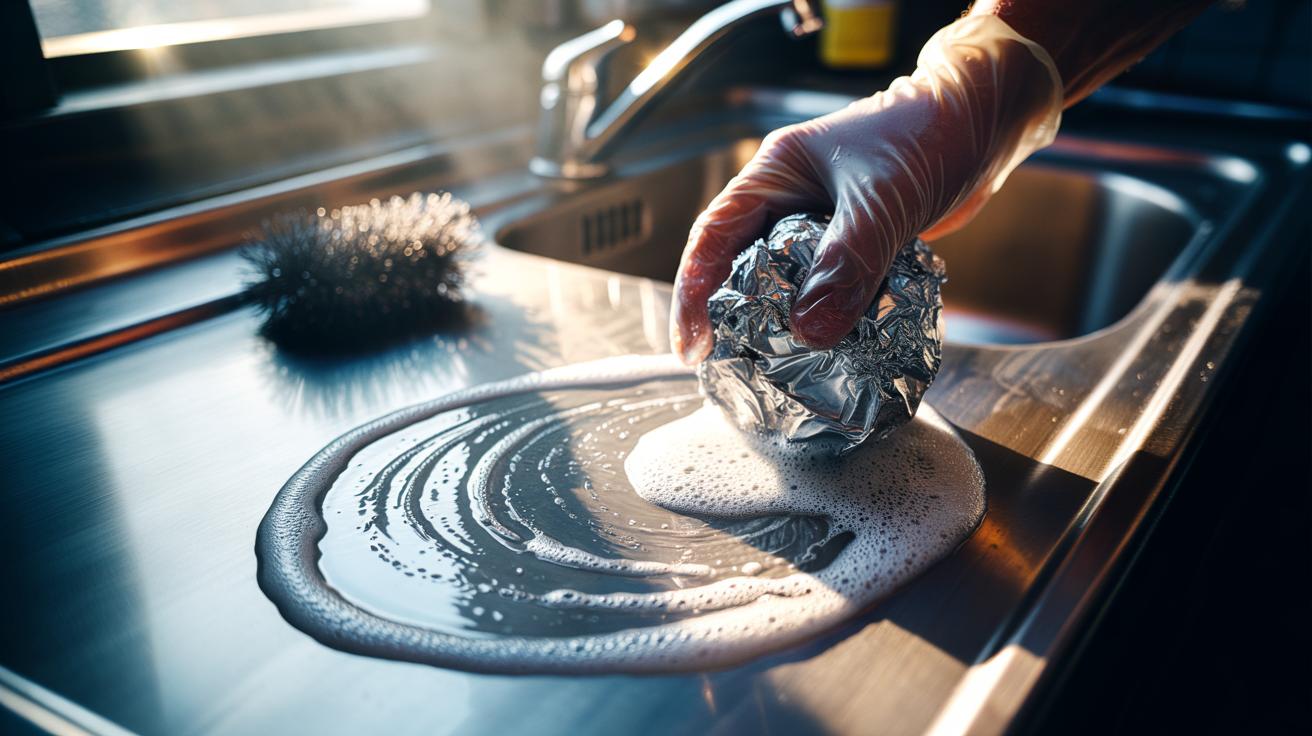
Kitchen folklore rarely survives a newsroom stress test, but one scrappy idea does: a crumpled ball of aluminium foil that brings back stainless steel lustre in under three minutes. It sounds like a hack. It behaves like good engineering. The foil’s softness, its micro-edges, and a dab of soap combine into a quick micro‑burnishing routine that lifts film, loosens grime, and buffs without gouging. Results are startlingly uniform. Sinks gleam. Pans lose that brown halo. Appliances shed fingerprints and the tired, grey patina of daily use. It’s fast. It’s cheap. It works because of how metals meet, not because of kitchen magic. Used correctly, the method outperforms many branded scrubbers, and leaves fewer scratches than you fear.
How a Foil Ball Polishes Stainless in Minutes
Stainless steel is tough, but its beauty depends on a delicate surface. The goal isn’t grinding. It’s burnishing: flattening micro-peaks so light reflects cleanly. A crumpled foil ball hits a sweet spot of soft metal against hard metal. Aluminium is lower on hardness scales than stainless, so it abrades films and hardened residues first, not the base steel. As you rub, the foil work-hardens at its creases and sheds a touch of aluminium oxide, a fine, mild abrasive that helps dislodge deposits. Add water and a drop of washing-up liquid to float debris, and you get controlled cutting with minimal risk.
Direction matters. On brushed finishes, follow the grain to preserve the factory lines and reduce visible swirls. On mirrored surfaces, light circular strokes distribute contact evenly. Pressure should be firm but not brutal; let the micro-edges do the work. Rinse often. Inspect. Repeat where needed. Do not use this method on non-stick coatings, painted panels, or lacquered trims. That caveat aside, foil’s tactile feedback makes it hard to overdo, unlike aggressive pads that mask what’s happening under your hand.
The 3-Minute Method: Step-by-Step
Time it. Three minutes is enough for most kitchen stainless. Start by tearing a square of foil, crumpling it into a golf-ball shape with a few sharp ridges. Wet the surface with warm water. Add a pea of washing-up liquid or a pinch of bicarbonate of soda for lift. Now rub with light, steady strokes. You’ll feel resistance fade as films break down. Work in sections the size of your hand so you can rinse and check progress quickly.
For burnt-on rings on pans or kettles, soak for five minutes in hot, soapy water first. Then use the foil ball to target edges where carbonised residue clings. Rinse. If limescale is the issue, wipe with diluted white vinegar, wait 60 seconds, then foil-polish and rinse thoroughly. Never mix vinegar with bleach or chlorine cleaners. Finish by buffing with a soft microfibre cloth to align the sheen. Stubborn spots? Refresh the foil. When it smooths out, it’s done its job. Bin it, or if clean, recycle according to local guidance.
Foil vs Traditional Scrubbers: Cost, Speed, Scratch Risk
The case for foil isn’t only thrift. It’s control. Steel wool cuts fast but sheds shards, can rust, and leaves tell-tale scratches that catch grease later. Plastic scouring pads are safer but blunt quickly and smell after a few uses. Microfibre cloths are wonderful for fingerprints, less so for cooked-on rings. A foil ball sits between these tools, combining bite with surprising gentleness. It’s also disposable, which helps with hygiene on greasy jobs.
| Tool | Typical Time to Shine | Scratch Risk (on Stainless) | Cost per Use | Notes |
|---|---|---|---|---|
| Foil Ball | 1–3 minutes | Low–Medium (grain-aware) | Very low | Conforms to curves; disposable |
| Steel Wool | 1–4 minutes | Medium–High | Low | Can shed and rust; harsh |
| Plastic Pad | 3–6 minutes | Low–Medium | Low–Medium | Dulls quickly; odour risk |
| Microfibre Cloth | 1–2 minutes (fingerprints) | Very Low | Low (reusable) | Limited on baked-on films |
The fastest shine with the least collateral damage often comes from foil plus soap and patience. For large appliances, finish with microfibre and a drop of mineral oil to even the gloss and add fingerprint resistance.
When Not to Use Foil: Finishes and Caveats
Not all “stainless-looking” surfaces are bare steel. Some fridges and hobs carry a clear lacquer, a printed grain, or a polymeric film. Foil will mark these. Test discreetly. If colour transfers to your cloth, stop. The method is also wrong for non-stick cookware, enamel, powder-coated racks, anodised aluminium, and seasoned cast iron where the patina is the point. On true mirror-polish stainless, minimal pressure is vital; over-enthusiasm can haze the finish, which then needs dedicated metal polish to correct.
Wear light gloves if you’re doing a big sink; foil edges can be nippy. Ventilate when using vinegar. Rinse thoroughly to remove residues that can attract fresh grime. Recycle clean foil where your council accepts it; balled-up pieces are easier for sorting lines to capture. And remember: if the surface looks coated or feels tacky, don’t rub it with foil. Reach for microfibre and a pH-neutral cleaner instead.
Quick Science: Why It Looks So Shiny
Shine is physics, not polish adverts. Stainless dulls as microscopic ridges scatter light. By gently reducing surface roughness (Ra), you restore specular reflection. A foil ball’s complex geometry—lots of tiny facets—spreads pressure across innumerable contact points, flattening peaks without ploughing trenches. The trace of aluminium oxide it deposits acts as a benign polishing aid while you work, then rinses away. Meanwhile, surfactants in washing-up liquid break the bond between oils and the steel’s chromium-rich passive layer, letting debris lift cleanly.
Heat-tint or tea staining? That’s oxidised metal and adhered compounds. Foil-assisted burnishing thins those layers, revealing the intact passive film beneath. The result is visual clarity: straighter reflections, deeper blacks, fewer milky halos around taps and rims. What looks like “new steel” is mostly fewer places for light to scatter. That’s why three careful minutes often exceed ten hurried ones with a harsh pad.
A crumpled ball of aluminium foil is not a miracle. It’s a smart, tactile way to harness materials science at the sink. Fast enough for a weeknight tidy. Subtle enough for brushed finishes. Cheap enough to be guilt-free. Used with soap, light pressure, and a rinse, it outpaces many scrubbers while keeping scratches at bay. Keep microfibre for finishing, keep harsh pads for heavy restoration, and keep foil for the middle ground where most mess lives. Your stainless will thank you, and so will your schedule. What will you try first—sink, saucepan, or that fingerprint-magnet fridge door?
Did you like it?4.5/5 (27)