In a nutshell
- ✨ Rice as a Micro-Scrubber: Uncooked rice delivers gentle, uniform abrasion that polishes glass without scratches; add warm water, a drop of washing-up liquid, and optional white vinegar for a 30-second clean.
- ⏱️ Fast Method: Add 2–3 tbsp rice, warm water, and soap; cover and swirl with controlled wrist rotations for 30–45 seconds, then sieve, rinse, and air-dry—no boiling water; test antique/lead crystal first.
- 🧪 Troubleshooting: Tackle hard water deposits with vinegar, break down biofilm using vinegar + bicarbonate, and remove odours with an overnight vinegar soak and sunlight; note that stubborn etching may be permanent.
- 🧰 Right Grain & Kit: Use small/broken grains for tight necks and long-grain for wider vases; keep a sink-side caddy with rice, vinegar, a funnel, and microfibre cloth to make maintenance effortless.
- ♻️ Simple, Low-Cost, Eco-Friendly: A quick-reference approach beats harsh chemicals and specialty brushes, while a final rinse with distilled water prevents new mineral film and keeps glass crystal-clear.
Every home has a beautiful vase that’s turned cloudy, streaked, or stubbornly green at the base. You rinse. You swirl soap. The smear stays. Here’s the counterintuitive fix that editors swear by and florists quietly use: plain rice. It’s fast. It’s gentle. It’s oddly satisfying. In just 30 seconds, those grains act like a tiny army of polishers, scouring away residue where brushes can’t reach. The trick isn’t force—it’s controlled friction, guided by water and a drop of washing-up liquid to carry away loosened grime. No harsh chemicals. No special kit. Just a pantry staple that brings glass back to a brilliant, showroom sheen.
How Rice Works as a Micro-Scrubber
The science is simple: uncooked rice provides thousands of small, rounded edges that deliver uniform, low-grade abrasion. Glass measures around 5.5 on the Mohs hardness scale; rice is far softer, which is why it buffs residue without scratching. That’s the safety secret: softer media can scrub harder surfaces without harm. Mixed with warm water, grains tumble through tight necks and bulbous bases, dislodging the biofilm left by stems, sap, and mineral-rich tap water. Where a bottle brush bends and misses, rice flows. It reaches corners. It swirls under lips and along seams.
Add a drop of washing-up liquid and you alter surface tension, letting the water slip under grime. A teaspoon of white vinegar helps dissolve mineral haze. Even the sound tells you it’s working—the patter of grains against glass is a gentle, even rasp, not a scratch. If the vase is antique or lead crystal, test first on a low-visibility patch. But for everyday glassware, you’ll get clarity fast, with no etched trails or cloudy aftermath.
Rice also outperforms harsher options. Salt can be too angular. Sand is risky and messy. Steel shot? Overkill. In contrast, rice swells slightly as you work, smoothing its action while maintaining grit. It’s the natural Goldilocks: not too sharp, not too soft, just right for vase interiors that defeat standard tools.
Step-by-Step: The 30-Second Method
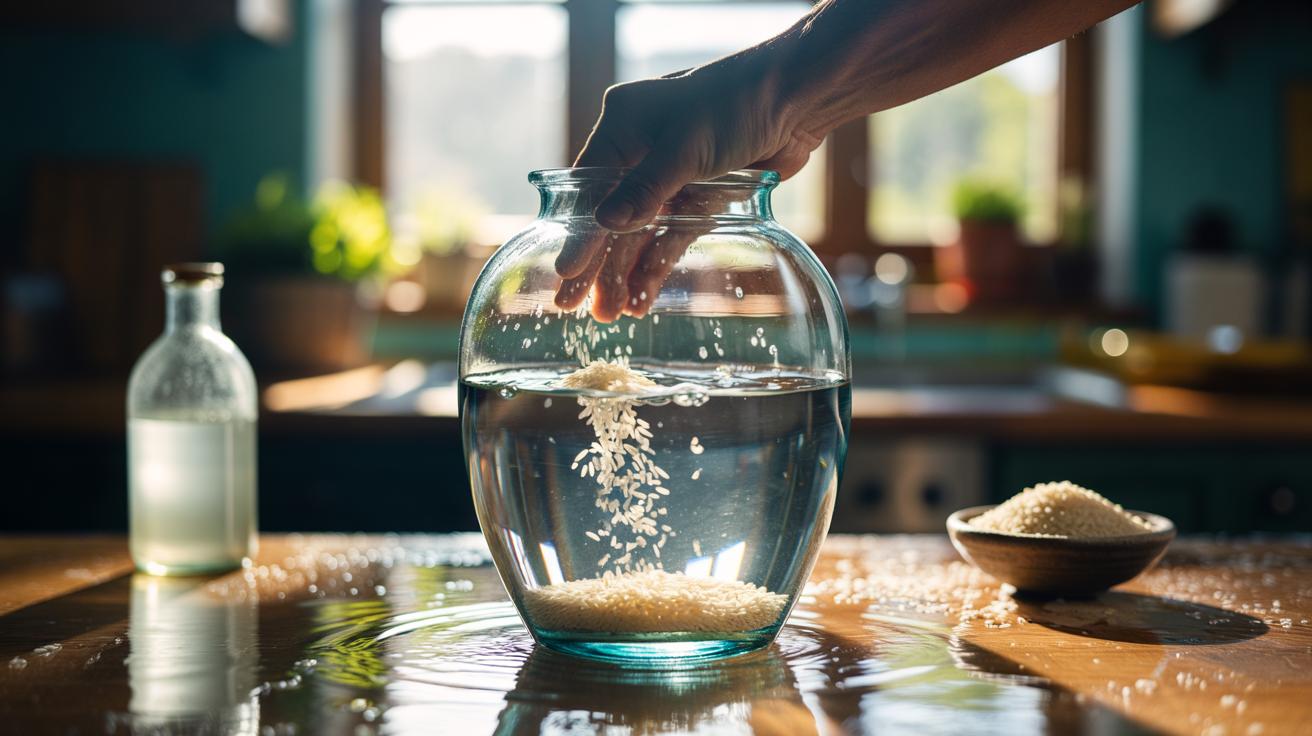
First, empty the vase of stems and water. Rinse out loose debris. Add a small handful of uncooked rice—about 2–3 tablespoons for a medium vase. Pour in warm (not hot) water until the base is comfortably covered and add one small drop of washing-up liquid. Do not use boiling water, which risks thermal shock and cracks. For heavy mineral haze, include a teaspoon of white vinegar. You’ve now built a micro-tumbler that cleans from within.
Cover the opening with your palm. Shake with short, controlled rotations. Not a wild cocktail shake; think rhythmic, wrist-led circles that roll the grains around the inner surface. Focus on the base first, then tip to send the rice through the neck and shoulders. You’ll feel the texture change as grime lifts. Thirty seconds is usually enough. For gnarlier build-up, go 60–90 seconds in bursts to avoid fatigue.
Pour out the contents through a sieve to catch the grains. Rinse thoroughly with cool water until it runs clear and squeak-free. Air dry upside down on a lint-free cloth. Finished glass should sparkle, without streaks or sticky patches. If a faint ring persists, repeat briefly with fresh rice and a touch more vinegar. Results tend to improve dramatically on the second pass.
Troubleshooting Cloudy Films, Odours, and Stubborn Stains
A cloudy veil often means hard water deposits. In that case, enhance the swirl with a 1:4 mix of white vinegar to warm water. The acidity softens limescale while rice breaks it up mechanically. For greenish tints or a slimy feel, you’re dealing with a biofilm from plant matter. Add a pinch of bicarbonate of soda alongside vinegar; the fizz helps lift organic residues and neutralises odour. Keep the shake controlled—bubbles multiply the action, but you don’t need brute force.
Brown tea-like stains usually hide in narrow bases. Pre-soak for five minutes with warm water and a drop of soap before you add rice. If the neck is extremely tight, use smaller grains or broken rice to increase flow. For delicate cut glass or etched patterns, shorten the shake and let chemistry do more of the work: a longer soak, gentler swirls, frequent checks under bright light. If you see clouding that won’t shift at all, it may be permanent etching rather than dirt.
Persistent odours from old arrangements respond well to an overnight, low-strength vinegar soak after the rice clean. Rinse thoroughly and dry in sunlight on a windowsill; UV helps freshen. Avoid bleach on coloured glass—it can fade dyes—and never mix bleach with vinegar. The rice method remains the safest weekly tune-up to prevent problems reappearing.
Choosing the Right Grain and Kit for the Job
Different vases, different tactics. Long, narrow-necked vessels benefit from small or broken grains that navigate tight turns. Wide cylinders happily take standard long-grain. Parboiled rice stays firmer longer; basmati moves fast; short-grain offers more mass and contact. The goal is consistent contact without excessive scratching risk, which rice inherently avoids. Keep a tiny caddy by the sink with a jar of rice, a mini funnel, vinegar, and a soft microfibre cloth. When flowers come out, the kit comes in. Habit beats hassle.
Use this quick-reference guide to dial in quantities and add-ins. It’s deliberately simple, so you can glance and go. Adjust slightly based on vase shape and how stubborn the build-up looks under light. If in doubt, start mild and repeat.
| Vase Size | Rice | Water | Add-ins | Shake Time |
|---|---|---|---|---|
| Small bud vase | 1 tbsp | 100 ml warm | Drop of soap | 20–30 sec |
| Medium bouquet | 2–3 tbsp | 200–250 ml warm | Soap + 1 tsp vinegar | 30–45 sec |
| Large floor vase | 4–5 tbsp | 400–500 ml warm | Soap + 2 tsp vinegar | 45–60 sec |
Finally, store vases dry. A last rinse with distilled water prevents new mineral film. Dry rims with a cloth to stop tide marks. When you see that first blush of cloudiness, reach straight for the rice. Thirty seconds now saves a deep-clean later. It’s the kind of small, dependable ritual that keeps glass looking newly bought for years.
That’s the beauty of this pantry hack: low cost, minimal effort, consistent brilliance. You don’t need specialist brushes or harsh chemicals to return a vase to photo-ready clarity. Just a handful of grains, warm water, and your wrist doing calm circles. The result is glass that gleams under any light, from kitchen window to dining table spotlight. Will you keep a jar of rice by the sink and turn every flower change into a 30-second refresh, or will you reinvent the method to suit your trickiest, most treasured piece?
Did you like it?4.4/5 (27)