In a nutshell
- 🌿 Vinegar’s acetic acid acts as a fast contact herbicide, scorching green tissues and causing rapid desiccation—often visible within hours in sun and dry conditions.
- ⚠️ It does not reach roots, so deep-rooted perennials like dandelion may regrow; expect repeat spot-treatments to exhaust reserves over time.
- 🧪 Choose the right strength: 5% for seedlings, 10–15% for tougher leaves, 20%+ for hard surfaces—use PPE, control drift, and stick to authorised products.
- 🛠️ For best results, spray on dry, sunny days with a coarse nozzle, add a drop of surfactant, avoid runoff, recheck in 48 hours, and skip salt in planting areas.
- ♻️ Prioritise safety and ecology: shield ornamentals, never mix with bleach, limit repeated drenching, and integrate with mulching and hand-weeding for a wildlife-friendly plan.
British gardeners love a quick fix when dandelions and pavements erupt with green invaders. One pantry staple keeps surfacing: vinegar. Cheap, swift, and surprisingly potent, it can scorch leafy nuisances in a single sunny afternoon. But speed isn’t the whole story. Understanding how acetic acid works, which concentration to choose, and when to spray makes the difference between a clean path and collateral damage to your borders. Used wisely, this home remedy acts like a reporter’s flashbulb—intense, brief, and focused. Used poorly, it singes the wrong subjects. Knowing the science and the limits is what turns a fad into a practical tactic.
Why Vinegar Burns Weeds So Fast
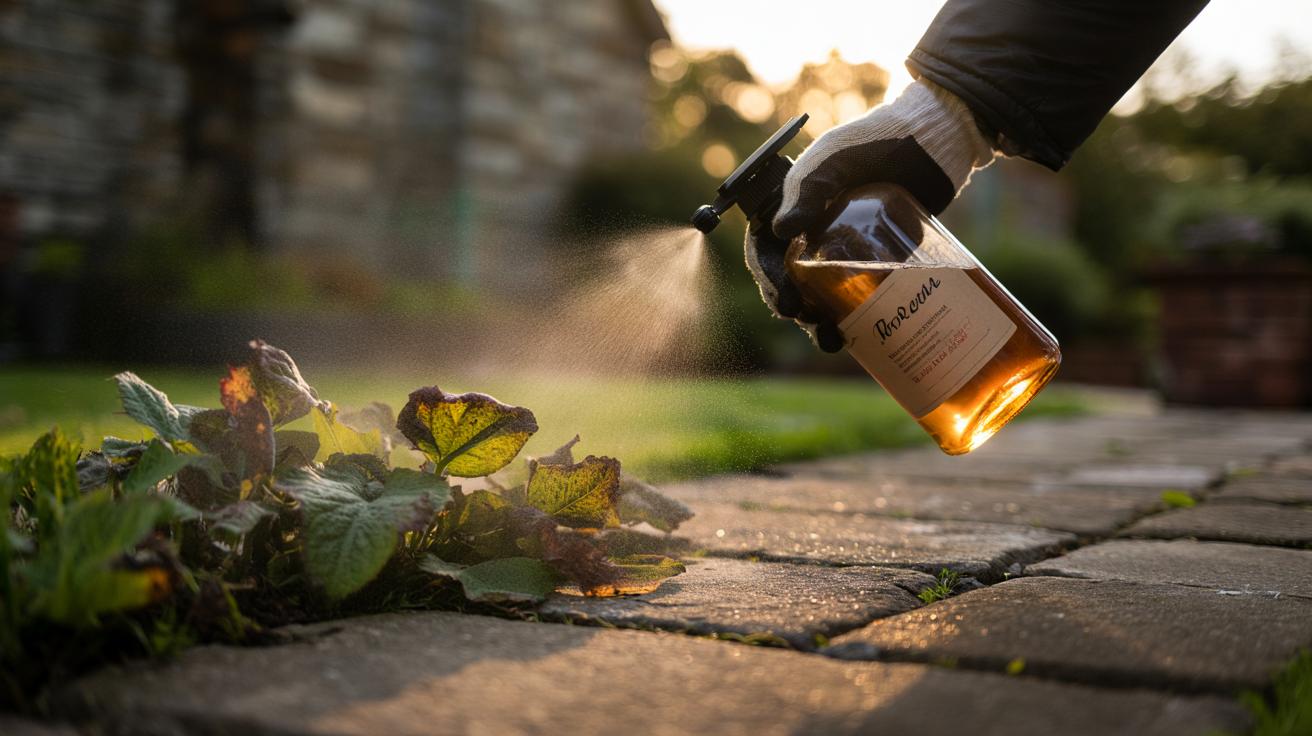
At its heart, vinegar’s weed-killing power comes from acetic acid, a sharp, organic acid that rapidly disrupts cell membranes. When it hits tender green tissue, it dissolves the protective cuticle, dehydrates the cells, and causes sudden desiccation. Leaves wilt, blister, and turn brown. In strong sunshine and low humidity, the effect is dramatic. Sometimes hours, not days. This is why gardeners report that paved areas go from sprouting to spotless between late breakfast and tea.
But there’s a crucial caveat: vinegar is a contact herbicide. It attacks what it touches, not the root system. Annual weeds and young seedlings—soft, shallow-rooted—succumb quickly. Deep-rooted perennials like bindweed or dandelion often regrow, because their underground reserves remain intact. Expect visible speed, not systemic control. For tough perennials, repeated hits can exhaust the plant over time, especially if you spray new regrowth promptly. Weather matters too: warmth and sun turbocharge the burn; rain dilutes and delays the impact. And drift damages. A light breeze can carry fine droplets onto prized lettuce or lavender, leaving crisped scars by sundown.
Choosing the Right Strength and Tools
Household vinegar in the UK typically contains around 5% acetic acid. It’s capable on tiny seedlings and moss, but it can be underwhelming on established weeds. Horticultural vinegar—10% to 20% acetic acid—delivers faster, harsher results, though with significantly higher risks to skin, eyes, and nearby plants. Concentrates above 20% are caustic. Treat them as you would a strong cleaning acid: goggles, gloves, long sleeves, closed shoes. Do not spray on windy days or when pets and children are nearby. Aim for dry, sunny conditions and temperatures above 15°C for the fastest scorch.
Equipment matters. A hand trigger sprayer gives control on patios and paths; a pump sprayer covers larger gravel drives. Add a drop of mild washing-up liquid as a surfactant to help the solution wet waxy leaves. Use a coarse nozzle to reduce drift. Avoid brass or metal fittings if you’re using high-strength acetic acid; it’s corrosive. On lawns, spot-treat only—vinegar is not selective and will burn grass. And a quick regulatory note: choose products authorised for weed control where required, and read labels. Some off-the-shelf “cleaning” vinegars aren’t formulated or approved for plant use.
| Acetic Acid Strength | Visible Results | Best Targets | Risks/Notes |
|---|---|---|---|
| 5% | 6–24 hours | Seedlings, moss, small annuals | May need repeats; gentler on surroundings |
| 10–15% | 2–8 hours | Established annuals, young perennials | Wear PPE; higher drift damage risk |
| 20%+ | 1–4 hours | Stubborn leafy weeds on hard surfaces | Caustic; serious eye/skin hazard |
Step-By-Step Application for Rapid Results
Start with identification. Are you seeing shallow-rooted annuals or entrenched perennials? For patios, gravel paths, and driveway cracks—prime zones for quick wins—mix a batch appropriate to your target: 5% for seedlings, 10–15% for tougher leaves. Add one teaspoon of mild washing-up liquid per litre to improve adhesion. Test a small patch first. Wait two hours. Observe any drift scorch on nearby ornamentals. If clean, proceed.
Choose a dry, bright day. Shake the sprayer, set a coarse cone spray, and coat the foliage until it glistens but doesn’t drip. Coverage is king; any untouched leaf will keep photosynthesising. Do not water for 24 hours. Expect visible sagging by mid-afternoon in sun. Return in 48 hours to assess. For perennials, strike the fresh regrowth again—small, frequent hits are more effective than occasional dousings. Skip the internet hack of adding salt in beds; sodium builds up, damaging soil structure and nearby plants. Reserve salt only for lifeless hardscapes if you accept long-term residue. Keep records: date, strength, weather. Your garden is your lab.
Limits, Safety, and Eco Considerations
Vinegar is not magic. It won’t translocate to roots like glyphosate, so repeat treatments are part of the pact, especially against docks, brambles, and dandelions. In borders, shielding is essential. Use a piece of cardboard as a spray guard, or apply with a foam brush on windy days. Edibles are sensitive; even a fine mist can pockmark leaves. Do not mix vinegar with bleach or chlorinated cleaners—dangerous gases can form. Store concentrates out of light and away from metals. Rinse sprayers with water after use to protect seals.
Environmentally, acetic acid breaks down quickly and doesn’t persist in soil like some salts and synthetic herbicides. Yet acidity can briefly nudge surface pH, affecting nearby microbes and worms if you drench repeatedly. Targeted, judicious use limits harm. Another ethical point: weeds also feed pollinators. Removing them wholesale reduces nectar in lean seasons. Favour spot treatments on hard surfaces and around seedlings you’re protecting. In lawns, consider mowing and overseeding rather than blanket burning. The smartest approach blends methods: mulch to block light, hand-pull after rain, and reserve vinegar for that fast, visible clean-up when time is tight.
Used with intent, vinegar is a sharp tool: swift, cheap, and brutally effective on what it touches. Gardeners who understand contact action, weather windows, and safe handling typically win back patios and paths in a day, then follow up to wear down persistent roots. That’s the formula—speed today, strategy for tomorrow. Are you ready to test a small patch, measure the results, and decide where a quick scorch fits into your broader, wildlife-friendly weed plan?
Did you like it?4.4/5 (28)