In a nutshell
- 🪙 A penny can extend vase life by releasing copper ions that act as a mild antimicrobial, especially effective with UK pre‑1992 bronze pennies and slightly acidic water.
- 🧼 Prioritise care basics: clean vase, fresh water changes every 1–2 days, re‑cut stems 1–2 cm at 45°, remove submerged leaves, and keep blooms away from heat and ethylene-producing fruit.
- 🌷 Effect varies by flower: penny helps roses and chrysanthemums, is mixed for tulips, limited for hydrangeas, and not useful with daffodils unless conditioned separately.
- 🧪 Smarter substitutes: use commercial flower food as the gold standard; safe DIYs include a tiny bleach dose (~1/4 tsp per litre) or vinegar + sugar; activated charcoal helps keep water clear.
- 🇬🇧 UK-savvy tips: consider hard water by adding a touch of citric acid/lemon, rinse the coin, and treat the penny as a complement, not a cure, to squeeze extra days of colour.
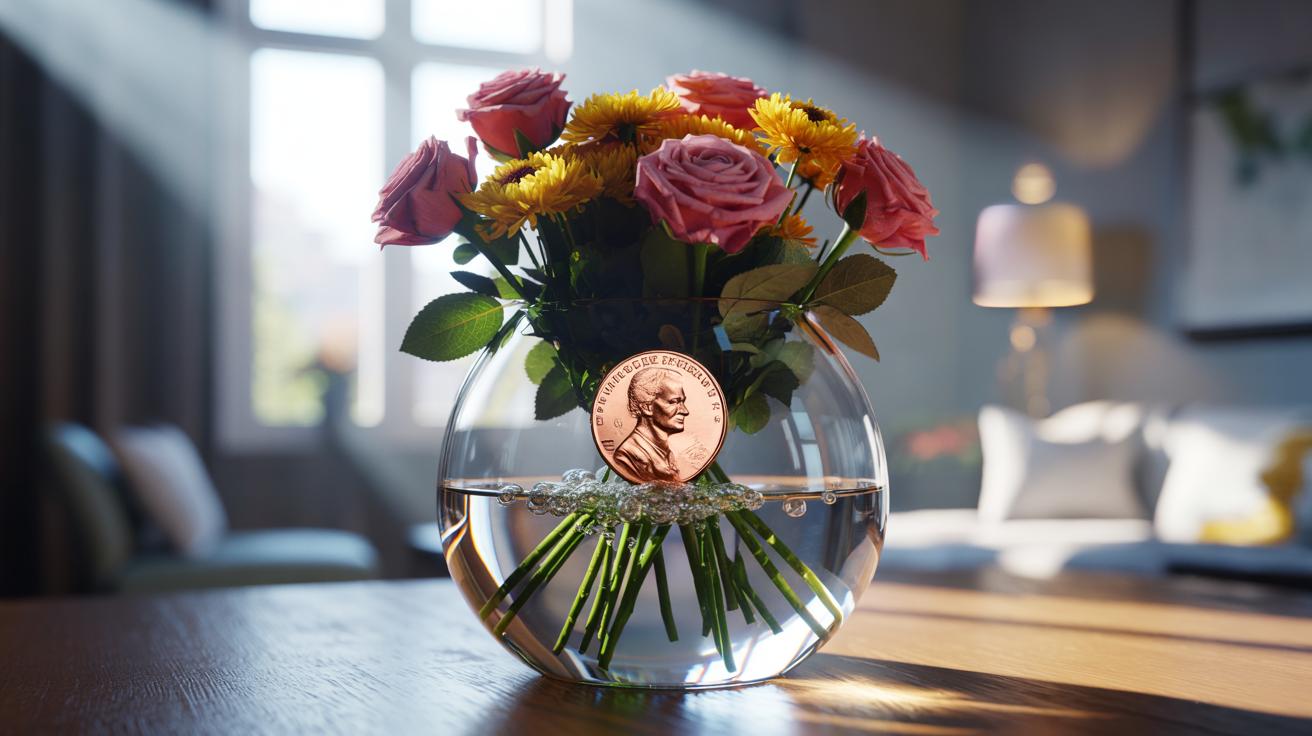
Some tips travel by word of mouth. Others jangle in a pocket. Among the most enduring household hacks is the idea that a copper coin in a vase can keep cut flowers perkier for days. It sounds quaint, even old-fashioned. Yet there is chemistry at play. When a penny sits in water it can release trace copper ions that act as a mild antimicrobial, slowing the bacterial bloom that chokes stems. Less bacteria means clearer stem vessels and better water uptake. Here’s how the trick works, when it shines, when it falls short, and what professional florists in the UK actually recommend for blooms that look newsroom-fresh on day five.
The Science Behind the Penny Trick
Cut flowers die twice. First in the field, then slowly in the vase as microbes multiply and block the tiny tubes that pull water upward. A small dose of copper ions acts as a biocide, disrupting bacterial enzymes and puncturing cell membranes. That’s the quiet logic behind the penny hack. In the UK, pre-1992 pennies are mostly bronze—around 97% copper—while later coins are copper‑plated steel. Both present copper at the surface, though older bronze releases ions more readily.
Water chemistry matters. Slight acidity and oxygen encourage ion release; stagnant, alkaline water does not. A single coin per litre is ample—more isn’t better and can stress petals. Think of the penny as a bacterial speed bump, not a miracle cure. Flowers still need clean tools, fresh water, and regular stem recuts to maintain hydraulic flow. Without those basics, bacterial loads rebound, the xylem clogs, and petals collapse despite the coin.
There’s a caveat. Currency is handled constantly and picks up residues. Rinse the coin before use. If your vase is cloudy or smells sour, change the water. The penny’s role is supportive, not sovereign.
Practical Steps for Longer-Lasting Bouquets
Start clean. Wash the vase with hot, soapy water and rinse thoroughly. Fill with lukewarm tap water. Drop in one clean penny per litre. If you have the sachet that came with your bouquet, use it; commercial flower food blends acidity, sugar, and a biocide to balance nutrition and hygiene. Re-cut stems by 1–2 cm at a 45° angle with sharp, sanitised secateurs to open fresh pathways and prevent crushed tissue.
Strip any leaves that would sit below the waterline. They rot fast; bacteria feast faster. Keep arrangements away from fruits, radiators, and direct sun. Ethylene from ripening fruit accelerates senescence, while heat speeds microbial growth. Every other day, change the water, rinse the vase, give the stems a crisp fresh cut, and wipe the penny before returning it. If you’ve no sachet, a tiny pinch of sugar and a few drops of lemon juice can help, though consistency beats improvisation.
Specific tweaks matter. Tulips prefer cooler water and a tall vase for stem support. Roses benefit from immediate hydration after cutting; avoid smashing woody stems, a dated myth that bruises tissue. For daffodils, let them condition separately for a few hours to bleed their slippery sap before mixing with other flowers. Small habits compound into extra days of colour.
When a Penny Helps—and When It Doesn’t
The penny’s antimicrobial nudge shows best in mixed bouquets prone to murky water: roses, chrysanthemums, lilies. It’s less decisive for blooms whose decline is driven by internal chemistry rather than bacteria. Some stems exude saps that seal their own xylem or poison neighbours; copper won’t fix that. That’s why matching the trick to the stem saves disappointment.
| Flower Type | Penny Helpful? | Reason | Extra Tip |
|---|---|---|---|
| Roses | Yes | Reduces bacterial clogging | Re-cut daily; keep cool overnight |
| Chrysanthemums | Yes | Vase water often goes cloudy | Change water every 48 hours |
| Tulips | Maybe | Stem droop more than bacteria | Cool water; tall, snug vase |
| Daffodils (Narcissus) | No | Self-sealing sap affects others | Condition separately first |
| Gerberas | Limited | Prone to stem decay at the neck | Use flower food; shallow water |
| Hydrangeas | Limited | Air block; water uptake issues | Hot-water dip; alum on stem end |
Use the coin as a complement, not a crutch. If stems bend or heads flop, you’re likely dealing with air embolisms or ethylene stress, not bacteria. Then technique—fast recuts, cool storage, and clean water—beats any metal.
Eco-Safe Alternatives and Florist Wisdom
Not every vase needs a coin. Professional florists prioritise predictable, low-dose hygiene. The gold standard remains commercial flower food. It’s designed to feed petals while suppressing microbes, and it buffers pH for optimal uptake. If you’re out, a safe fallback is a microscopic bleach dose—about 1/4 teaspoon per litre—which disinfects without harming stems. Vinegar plus sugar mimics the acid-nutrient balance. Activated charcoal in the vase can help keep water sweet in wide-mouthed displays.
Technique outranks add‑ins. Use a spotless vase, change water routinely, and keep scissors sterile. Hard water areas benefit from a splash of citric acid or lemon to lower pH, but stay gentle. Ignore folklore like aspirin or fizzy drinks; they acidify, yes, yet invite sticky residues and bacterial rebound. Copper wire? Unreliable and untidy. A single well-rinsed penny is neater and sufficient when you want that antimicrobial edge without chemicals.
Finally, think placement. Cooler rooms at night, away from fruit bowls, can buy an extra day. Trim mixed bouquets so stems don’t crowd. Give blooms the space and clean water column they crave, and the penny becomes the quiet co-star rather than the whole show.
A copper coin will not resurrect a dying bouquet, but it can nudge a good care routine into great results. In UK homes—where water hardness varies and radiators hiss for half the year—small, steady habits determine how long petals glow. Clean vases, sharp cuts, fresh water, and a single penny make a pragmatic quartet. That’s not folklore; it’s fieldcraft. When you next unwrap a bunch, will you reach for the sachet, the coin, or both—and which flowers will you test first to see the difference?
Did you like it?4.5/5 (25)