In a nutshell
- 🌱 Banana peel infusion supplies gentle doses of potassium (K), phosphorus (P), calcium (Ca), and magnesium (Mg) to perk up blooms—think tonic, not a complete fertiliser.
- 🧪 Brew safely: rinse and chop peels, steep 12–24 hours, strain, then dilute 1:4; refrigerate briefly and discard if it smells off—good hygiene prevents pests and rot.
- 🌹 Best for container roses, pelargoniums, petunias, tomatoes, and peppers; less useful for leafy herbs or succulents, and only modest on clay soils already rich in K; use caution with cut flowers.
- 🔬 Evidence suggests benefits where K/P are limiting; avoid myths like burying whole peels or anaerobic ferments—proper composting is better for long-term soil health.
- ⚖️ Use alongside balanced feeds—it’s low in nitrogen; apply every two to three weeks, alternate with fertilisers, and don’t overdo K to avoid magnesium antagonism.
Cost-of-living gardening has sparked a small revolution on British windowsills: turning humble banana peels into a quick tonic that perks up tired plants and refreshes fading blooms. It sounds like folklore. It isn’t entirely. The peels supply a gentle dose of potassium, phosphorus, and calcium, nutrients that support flowering and resilience when soil is depleted. Results won’t mimic a lab-made fertiliser, yet many growers report livelier foliage, stronger buds, and better drought tolerance after a few careful waterings. Used judiciously, banana peel infusion is a thrifty, low-waste boost rather than a silver bullet. Here’s the science, the method, and the limits—so your plants thrive without the hype.
What Makes Banana Peel Infusion a Plant Tonic
Banana peels are unusually rich in potassium (K), the ion that helps plants move water, regulate stomata, and maintain turgor. That’s gardener-speak for sturdier stems, calmer wilting, and steadier flowering. They also contain phosphorus (P) that supports root growth and bloom initiation, plus calcium (Ca) for cell walls and magnesium (Mg) for chlorophyll. The infusion leaches a small portion of these nutrients into water, forming a mild supplement. Think “tonic”, not “total diet”. It’s especially helpful where potting mixes have been repeatedly flushed, or where container roses, pelargoniums, and fruiting tomatoes show bloom fatigue mid-season.
| Nutrient | Symbol | Primary role | What you might notice |
|---|---|---|---|
| Potassium | K | Water balance, stress tolerance | Firmer stems, better heat resilience |
| Phosphorus | P | Roots, bud formation | Improved bud set, stronger root action |
| Calcium | Ca | Cell walls, transport | Fewer tip issues, sturdier new growth |
| Magnesium | Mg | Chlorophyll production | Greener leaves when mildly pale |
| Nitrogen | N | Leaf growth | Low in infusion; pair with compost/feeds |
There’s a catch. The brew is low in nitrogen, so leafy houseplants won’t bulk up on it alone. Nor does it replace micronutrients like iron or manganese. Use it alongside balanced feeds and regular compost additions. When soils already contain adequate K and P, benefits shrink; when they’re short, the uplift can be surprisingly rapid, with perkier foliage visible within a week or two of measured applications.
How to Brew and Use the Infusion Safely
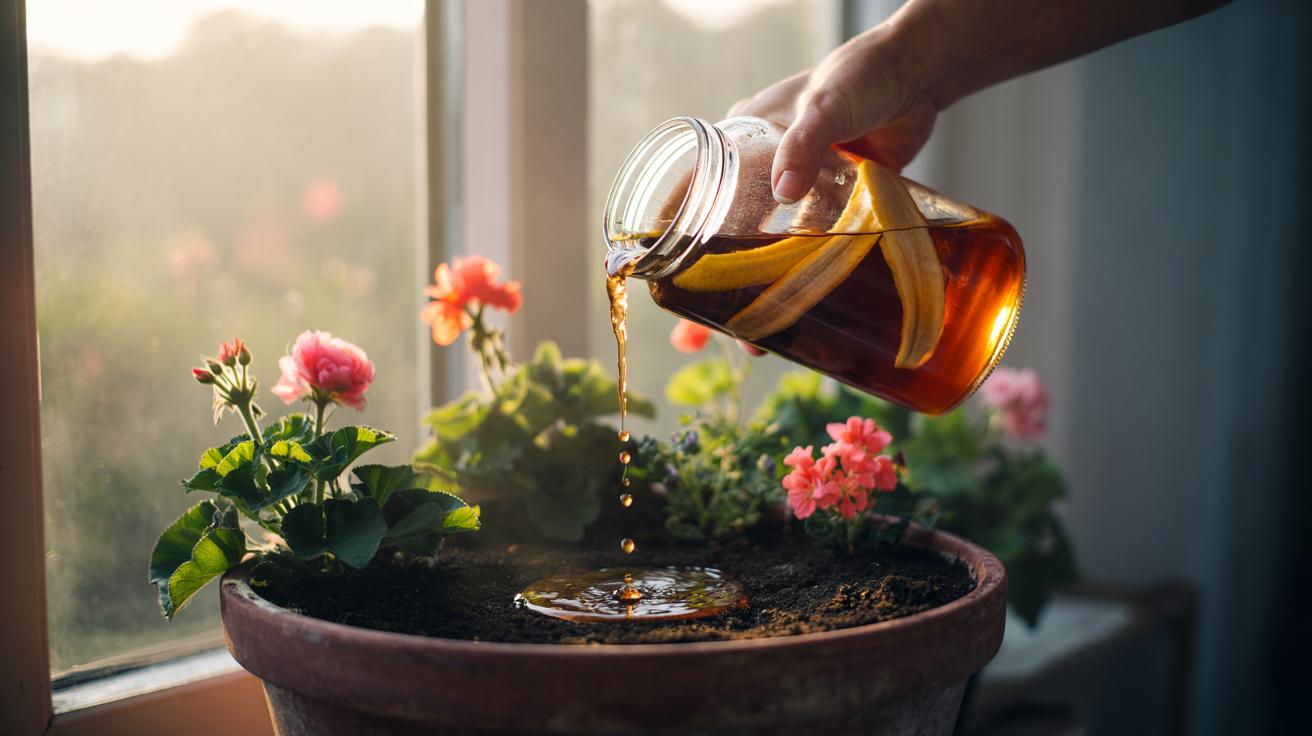
Rinse two clean banana peels, trim off any mouldy spots, and chop. Place in a lidded jar, cover with 1 litre of freshly boiled water, and let cool. Steep 12–24 hours, strain, and refrigerate the liquid. Alternatively, a cold brew (24–48 hours in the fridge) works, though it risks more microbes. Always discard if it smells sour, foamy, or rotten. You’re after a faintly sweet, tea-coloured liquid, nothing swampy. This is not compost tea; it’s a simple leachate with mild nutrients and minimal biology.
For use, dilute 1:4 with clean water. Water the soil around flowering plants every two to three weeks during active growth, pausing in winter. For containers 20–30 cm wide, a teacupful of diluted infusion is ample. Roses in pots, patio tomatoes, peppers, and blooming annuals tend to show the clearest response. Do not pour undiluted infusion into small indoor pots; salts and sugars can stress roots and invite fungus gnats.
Hygiene matters. Strain thoroughly to remove peel fibres that rot on the surface. Rinse watering cans after use. Avoid wetting leaves in close, humid rooms. Outdoors, apply in the evening so soil holds moisture. If you already feed with a balanced liquid fertiliser, alternate applications rather than stacking both in the same week. This prevents overdoing potassium, which can antagonise magnesium uptake in extremes.
Which Plants Benefit—and Which Do Not
Plants that convert a little extra potassium into floral stamina are prime candidates: roses, pelargoniums, petunias, fuchsias, and balcony tomatoes all respond well. Fruiting peppers appreciate the phosphorus nudge during early set. For orchids, use sparingly—Bark-based mixes tolerate the light K boost, but dilute thoroughly and apply only during active growth. Container plants, repeatedly watered and leached, tend to benefit most because nutrients wash away faster than in borders.
Herbs and leafy greens gain little; they crave nitrogen first. Succulents and cacti prefer lean, mineral-rich conditions and may sulk with sugary residues; skip them. On clay garden soils already high in potassium, effects are modest. For acid-loving shrubs like camellias, the infusion is generally safe when diluted, but it won’t correct iron chlorosis—use an ericaceous feed instead. Remember, this is a complement, not a cure-all.
What about cut flowers? A tiny splash (tablespoon per litre) can transiently perk tulips or roses by supplying K, but the sugars risk bacterial bloom in the vase. If you attempt it, scrub the vase, trim stems sharply, use cool water, and change it daily. Realistically, commercial sachets—sugar, acidifier, and a trace biocide—deliver superior longevity. For bouquets, cleanliness beats kitchen chemistry every time.
Evidence, Myths, and Sensible Expectations
Hard data are thin, yet the broad strokes align with plant physiology: where potassium and phosphorus are limiting, a gentle top-up supports bloom and stress handling. Small allotment trials and home A/B tests often show fuller trusses or steadier petals after two or three applications, particularly in containers fed chiefly with rainwater. That’s plausible. It isn’t sorcery. Nor will a banana peel resurrect a plant crippled by root rot, lack of light, or unwatered compost. Nutrition helps only when nutrition is the problem.
Myths persist online—burying whole peels, blending them into soil, or pouring dank ferments into pots. Those routes invite pests, moulds, and anaerobic conditions. The safer path is clear: brief steep, strain, dilute, and apply sparingly. For long-term fertility, compost peels properly; aerobic composting captures a broader nutrient spectrum and builds soil structure. The infusion is the quick cup of tea before work, not the weekly shop. Use it as a thrifty boost between regular feeds, and measure with your eyes: greener leaves, steadier buds, and plants that ride out a dry spell with fewer complaints.
Used with care, a banana peel infusion is a neat, low-cost trick: a nudge of K and P for blooms, a sustainability win for the kitchen, and a reminder that simple habits can revive tired pots. Keep expectations sober, hygiene strict, and dilution generous, and the results can be satisfyingly visible within a fortnight. Pair the tonic with light, water, and balanced feeding to unlock its modest magic. Which plant on your patio—or in your living room—would you trial first, and how will you measure the difference?
Did you like it?4.3/5 (27)