In a nutshell
- 🍕 Cold fermentation at 3–5°C slows yeast yet boosts flavour, improves CO₂ retention, relaxes gluten, and enhances browning—yielding dough that stretches easily and bakes beautifully.
- 🧪 Expect a complex, aromatic crust with a lighter, open crumb and a flexible schedule; the article contrasts room-temperature rise vs overnight chill for flavour, texture, handling, and timing.
- 📝 Practical method: strong bread flour or Tipo 00, 62–68% hydration, 2.0–2.4% salt, 0.1–0.3% yeast for 24–48 hours; ball or bulk, chill immediately, then warm and stretch gently before topping.
- 🔧 Troubleshooting: reduce yeast/time if overproofed, use sealed containers, preheat for colour, rest to avoid toughness; bake on a steel/stone or at 350–430°C in a pizza oven; adjust for seasons.
- 🧊 UK-friendly tips: the fridge standardises variable climates, aim for a steady 4°C, consider hard water effects, and freeze spare dough balls for schedule-proof pizza nights.
There’s a quiet revolution hiding behind your fridge door. Put your pizza dough to sleep overnight and you’ll wake to something transformed: deeply aromatic, extensible yet buoyant, and shockingly easy to stretch. This isn’t chef sorcery; it’s the predictable outcome of cold fermentation, the slow proof that amplifies flavour, texture, and timing flexibility for busy home cooks. Long, cool rest equals better pizza—richer taste, better browning, calmer handling. Whether you prefer strong British bread flour or silky Italian Tipo 00, chilling aligns gluten development with measured yeast activity, delivering a crust that blisters beautifully and resists toughness. Don’t fight the clock. Invite it. Your Saturday-night slice will thank you.
The Science of Cold Fermentation
Yeast never truly sleeps. At refrigerator temperatures—ideally 3–5°C—its metabolism slows, yet it continues to convert sugars into carbon dioxide and aromatic compounds. Enzymes in the flour, chiefly amylase and protease, keep working too, quietly breaking starches into fermentable sugars and nudging gluten toward tenderness. Cold slows the rise, but accelerates the flavour. That paradox explains why next-day dough tastes fuller, bakes darker, and opens more willingly beneath your fingers. Carbon dioxide dissolves more readily in cool dough, increasing gas retention; as the dough warms before baking, that trapped CO₂ expands, powering oven spring.
Gluten benefits as well. During a long chill, the network relaxes and realigns, reducing elasticity’s snap-back while preserving strength. The result is a dough that stretches thin without tearing, producing a lighter, lacier crumb. Acids produced by extended fermentation slightly lower pH, enhancing shelf life and improving browning via the Maillard reaction. Salt, critical to flavour and structure, moderates yeast activity further, stabilising the process over 24–72 hours. This is controlled fermentation, not guesswork, and it’s repeatable in any home kitchen with a reliable fridge.
Flavor, Texture, and Timing: What Changes
Cold fermentation deepens flavour through slow accumulation of organic acids and aroma compounds. The crust becomes complex—malty, faintly tangy, never sour unless pushed too far—while the crumb opens into irregular bubbles that look bakery-made. Residual sugars from starch breakdown encourage confident browning, so a domestic oven or outdoor pizza oven can produce those speckled, caramelised edges you crave. Texture shifts too: less chewiness, more delicacy, a crisp shell around a tender interior. It tastes like time, because time is the principal ingredient. There’s also liberation in scheduling. Make dough on Thursday, bake on Friday or Saturday; your calendar stops dictating dinner.
| Aspect | Room-Temperature Rise | Overnight Cold Rise |
|---|---|---|
| Flavour | Mild, simple | Complex, aromatic |
| Texture | Denser, chewier | Lighter, open crumb |
| Browning | Less pronounced | Enhanced caramelisation |
| Handling | Elastic, springy | Relaxed, easy stretch |
| Timing | Unforgiving | Flexible window |
For UK bakers dealing with cooler homes in winter or heatwaves in summer, the fridge is a great equaliser. It standardises conditions, keeping fermentation predictable across seasons. Consistency breeds confidence, and confidence makes better pizza.
Practical Steps for Overnight Dough
Start with quality flour: strong bread flour (12–13% protein) for chew, or Tipo 00 for finesse. Hydration at 62–68% suits most British flours; go higher if you’re chasing a super-open crumb and can handle stickiness. Use 2.0–2.4% salt. For 24–48 hours in the fridge, aim for 0.1–0.3% instant yeast by flour weight; reduce yeast as time extends. When in doubt, cut the yeast, not the time. Mix until a rough dough forms, rest 20 minutes (a short autolyse with flour and water only), then add salt and yeast and finish mixing. Target a final dough temperature near 22–24°C before chilling.
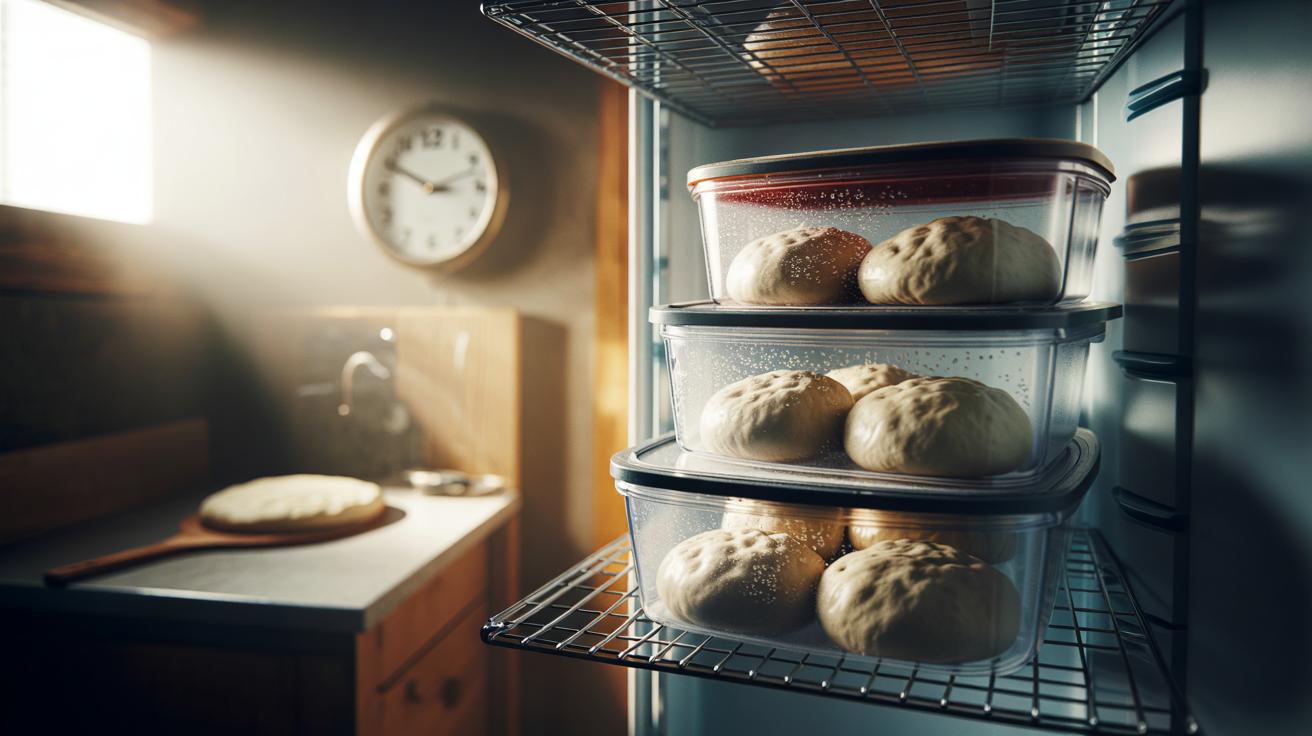
Decide on bulk vs ball. Many home bakers prefer balling first: portion into 230–270 g for 10–12-inch pizzas, light oil, then into lidded containers. Refrigerate immediately at 3–5°C. If you bulk-ferment, chill the mass, then divide and ball on bake day. On the day, remove dough 60–120 minutes before baking, allowing it to warm and relax. Dust lightly with flour or a 50/50 mix of flour and fine semolina to prevent sticking. Stretch gently from the centre outward, preserving the gassy rim. Top sparingly—sauce, cheese, heat, and time will do the rest.
Troubleshooting and Pro Tips
If dough overproofs—sticky, slack, sour—drop yeast next time or shorten the chill. A skin forming on top? Your container isn’t sealed; switch to tight lids or light oiling. Pale crusts point to under-fermentation or low oven heat; extend time or preheat longer. Toughness often means overmixing or insufficient rest; give the dough at least an hour at room temperature before shaping. For summer kitchens, reduce yeast and chill sooner; for cold winters, allow a slightly longer bench rest before baking. Control the variables you can: yeast quantity, temperature, and time.
Professional polish helps. Try a 20–30 minute autolyse to boost extensibility. Keep water cool so the dough doesn’t overheat during mixing. Seek a fridge set to a steady 4°C. If using hard water (common in London and the South East), consider a brief rest after adding salt to let the gluten relax again. Bake on a preheated steel or stone; if using a pizza oven, launch at 350–430°C for rapid blistering. Freeze spare dough balls after 24 hours if plans change; thaw overnight and bake the next day. Small tweaks compound into serious gains.
Cold fermentation turns a simple mix of flour, water, yeast, and salt into something restaurant-worthy with almost no extra effort. You’ll taste deeper complexity, feel silkier stretch, and bank a forgiving schedule that suits real life. The method is adaptable, resilient, and easy to repeat once you learn your fridge and flour. Let time do the hard work, and your oven will do the talking. So, will you try an overnight chill this week—or push to a 48-hour rest and see how far your homemade pizza can go?
Did you like it?4.7/5 (21)