In a nutshell
- 🔬 Rice acts as a microclimate dial: its amylose/amylopectin balance and hygroscopic nature shift cookie water activity, softening or crisping texture fast.
- 🍚 Use cooked rice (warm) in a sealed tin—kept separate—to release gentle moisture; check in 20–40 minutes to rapidly soften dry cookies without compromising flavour.
- 🌾 Deploy uncooked rice as a desiccant: layer under a paper disc to re-crisp edges or protect against humidity; typical timing ranges from 1–24 hours.
- 🥣 Build-in tenderness: replace 10–20% flour with rice flour (or up to 10% sweet rice flour) to reduce gluten, boost chew, and pair with higher brown sugar for lasting softness.
- 🛡️ Stay food-safe and precise: contain rice, discard after use, alternate methods if you oversoften, and rely on airtight tins with timed checks for repeatable results.
Every baker has chased the dream of a cookie that stays plush in the centre, with edges that yield rather than snap. The twist? Ordinary kitchen rice can tilt the balance, fast. Because rice is rich in starches that either give up moisture or pull it away, it acts like a tiny set of valves for texture. Use it the right way and yesterday’s brittle biscuit becomes today’s pillowy treat. Misuse it and you’ll make them crisper than a cracker. Here’s how to harness common rice—uncooked or cooked—to manage humidity, starch gelation, and water activity inside and around your cookies. The right rice trick, at the right time, changes texture in under an hour.
The Science of Rice, Moisture, and Cookie Softness
Rice is not just a pantry filler; it is a micro-engineered package of amylose and amylopectin. Uncooked grains are hygroscopic: they attract and hold water from the surrounding air. Cooked rice flips the script. Its starch network is swollen with water and, especially when warm, slowly releases moisture as vapour in a sealed space. That single difference explains why the same ingredient can either soften or crisp your bakes. Think of rice as a dial for the microclimate that surrounds a cookie.
Softness relies on managing water activity (aw) and the state of the cookie’s starches and sugars. When cookies cool, sugar recrystallises and starch retrogrades, pushing out water and toughening the crumb. Reintroduce gentle moisture and those crystals relax; the bite softens. Introduce a desiccant and the water migrates out; the snap increases. In practice, that means a pouch of warm cooked rice can rescue a dry batch, while a jar of uncooked grains prevents sogginess in humid weather. The trick is keeping rice close enough to influence humidity, yet not in physical contact with the biscuits themselves.
Two Fast Rice Methods to Control Texture
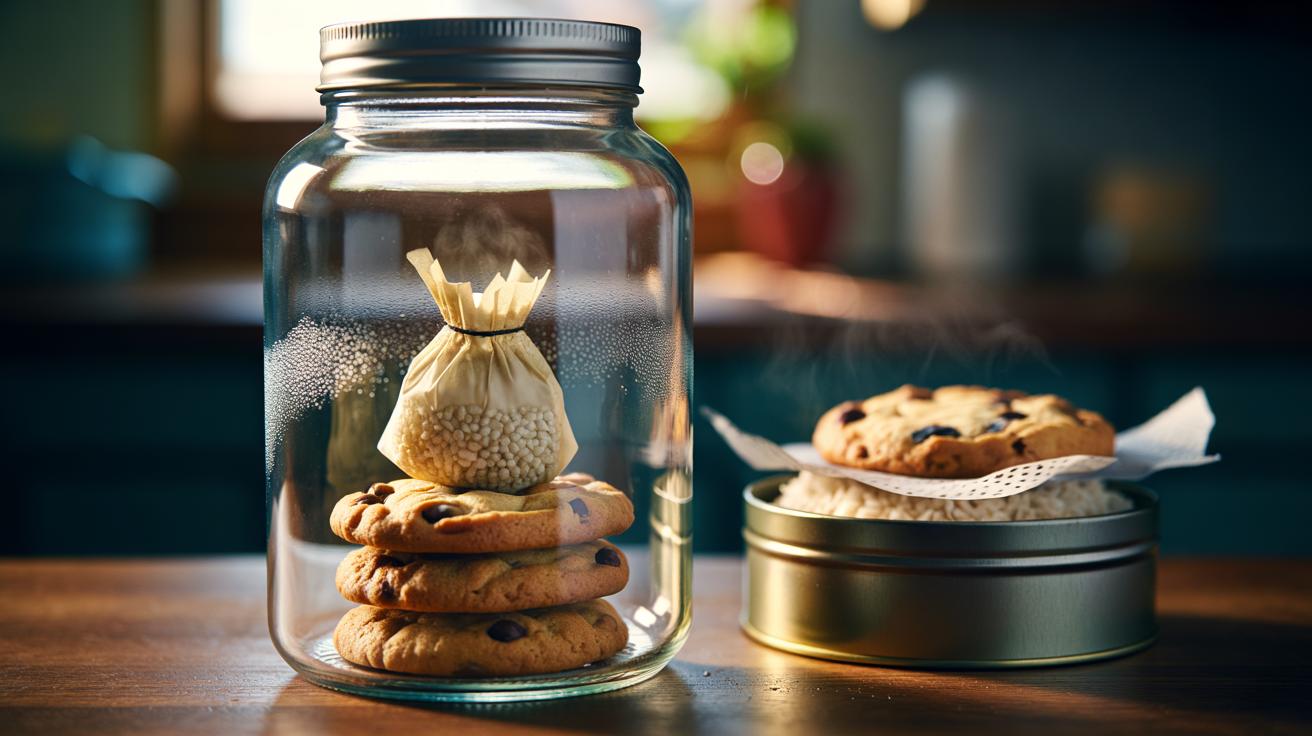
1) Rapid softening with cooked rice. Place 1–2 tablespoons of freshly cooked rice (still warm, not wet) into a small cup or paper sachet. Set it inside an airtight tin with the cookies, ensuring they do not touch. Seal. In 20–40 minutes, check a single biscuit. If still firm, reseal for another 15 minutes. Warm rice releases vapour that migrates into the crumb, relaxing crystals and plumping starch. This is the quickest non-microwave rescue that preserves flavour and structure.
2) Prevention or re-crisping with uncooked rice. Line the bottom of a storage tin with a shallow layer of dry rice and cover with a perforated paper disc. Add cookies on top and seal. The rice acts as a desiccant, pulling excess humidity away so edges don’t turn leathery. For an already-soft batch, 1–2 hours can restore snap; for storage, leave in place for days. Never mix methods in the same container at once—choose moisture in or moisture out.
| Goal | Rice Type | How It’s Done | Typical Time | Risk To Watch |
|---|---|---|---|---|
| Soften dry cookies | Cooked (warm) | Cup or sachet in sealed tin; no contact | 20–60 minutes | Condensation if overfilled or too hot |
| Keep soft, prevent chew loss | Cooked (cool) | Small portion in tin, refresh as needed | 2–6 hours | Staling if left open between checks |
| Re-crisp or store in humidity | Uncooked | Layer under paper, seal well | 1–24 hours | Over-drying to brittleness |
Mixing Rice Into the Dough for Lasting Tenderness
Beyond storage tricks, rice changes texture from the inside. Swap 10–20% of your wheat flour for rice flour to reduce gluten development and deliver a finer, “short” crumb that stays tender as it cools. In a 250 g flour base, replace 25–40 g. Regular white rice flour yields delicate bite; sweet (glutinous) rice flour, rich in amylopectin, adds gentle chew without gumminess when capped at 10%. Keep fats steady: 115 g butter per 200–220 g flour prevents dryness. Add one whole egg or 1 yolk for emulsified moisture, then chill dough 30 minutes to limit spread.
Why it works: with less gluten, the structure relies on starch gels and sugar glass, which relax more readily, so softness lingers. Bump brown sugar to at least 60% of total sugars to harness its hygroscopic molasses. Bake at 170–175°C (fan 160°C) until edges set but centres look slightly underdone; carryover heat finishes them. Rice flour is not a fad swap—it’s a precise lever that tamps down toughness while preserving rich crumb. If using gluten-free blends, add 1–2% by flour weight of psyllium or xanthan to prevent sandiness, and keep hydration consistent.
Troubleshooting, Timing, and Food-Safe Practice
Check texture early and often. A 10-minute check prevents oversoftening. If cookies pick up surface tack, air them 5 minutes on a rack; the interior stays plush while the skin resets. If only the edges are over-crisp, cluster cookies nearer the rice sachet to concentrate humidity. For mixed tins—chewy chocolate chips and crisp shortbread—split the tin with a card divider and position the rice on the chewy side. Precision placement trims hours off the process.
Be food-safe with cooked rice. Use freshly cooked rice hot for short interventions under 60 minutes, or cool it rapidly and refrigerate if you plan longer conditioning. Always keep rice contained—cup, filter bag, or paper—so starch granules don’t migrate to the biscuit surface. Discard rice after use. If you overshoot and the batch turns soggy, recover with the uncooked-rice method for 15–25 minutes. Label your tins with timing notes; the same biscuit size will then be repeatable. Remember: storage is chemistry. Airtight tins, low air space, and the right water activity keeper make softness last.
Rice isn’t magic; it’s controlled microclimate. Yet in a journalist’s kitchen test, it acted faster than bread slices and kinder than microwaves, rescuing a tough batch in under half an hour with flavour intact. Use cooked rice to nudge moisture in, uncooked rice to wick it out, and rice flour to build tenderness at the recipe level. By thinking like a humidity engineer, you can tune any cookie from crisp to cushiony and back again. Which texture will you dial in for your next tray, and what rice trick will you try first to get there?
Did you like it?4.6/5 (22)