In a nutshell
- 🥔 Foil-lined tray = faster crisp: Aluminium boosts conduction, creates micro oil pools, reduces sticking, and accelerates the Maillard reaction for shatter-crisp edges.
- 🔥 High heat + preheated fat: Line the tray with foil, preheat at 220°C fan (240°C conventional) with hot fat; strong contact heat sets the crust rapidly.
- 🔪 Step-by-step method: Use floury potatoes (Maris Piper/King Edward), parboil 7–9 minutes, rough the surfaces, dust with semolina, roast, flip once, and finish to deep gold.
- 🛢️ Choose the right fat: Rapeseed for reliability, goose fat/dripping for speed and flavour; maintain a thin gleaming film and add aromatics late.
- 🛠️ Troubleshooting: Don’t crowd, steam-dry after draining, lightly crumple foil for shallow-fry channels, adjust temperature for fan ovens, and flip once for maximum crunch.
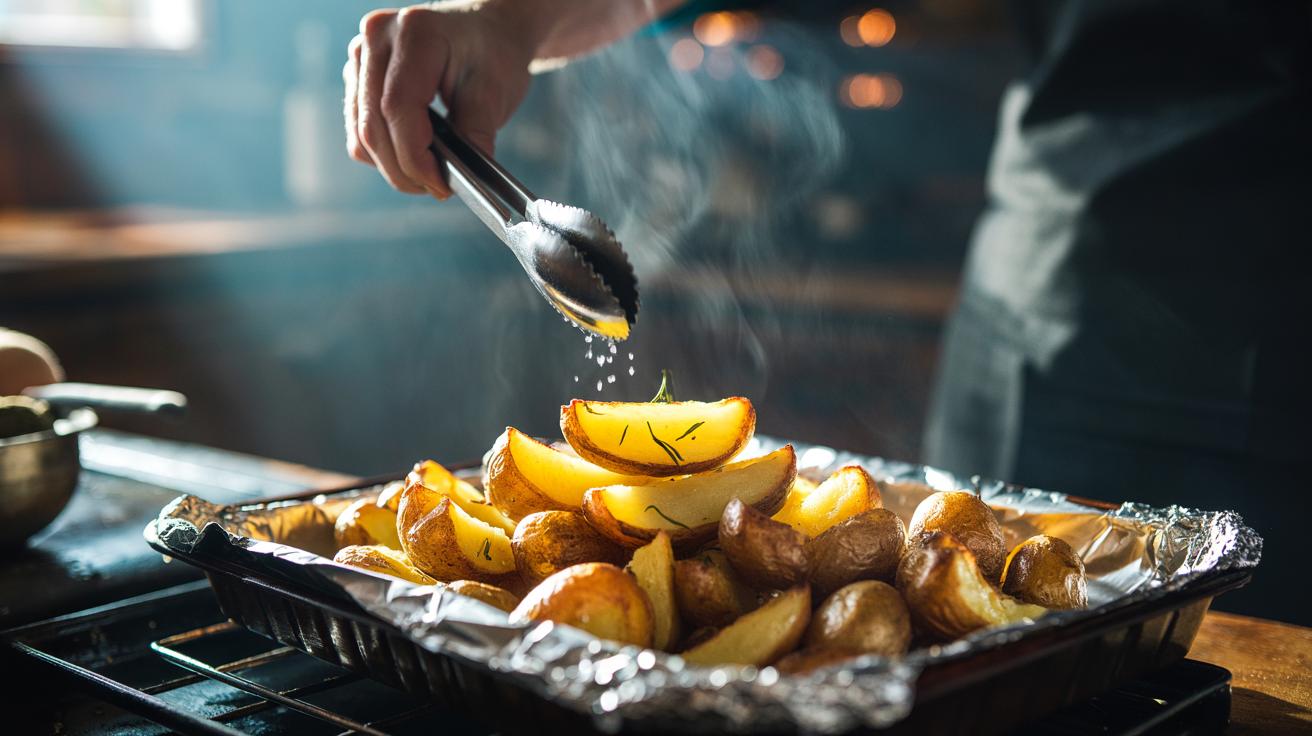
Roast potatoes that shatter at the bite are the holy grail of the Sunday table. Home cooks chase tricks; chefs swear by technique. Here’s the fast, repeatable fix: lay foil on the pan. Not a tent, not a wrap. A sheet that turns your tray into a slick, high-heat stage where spuds crisp quickly and evenly. This simple layer changes the physics of the roast. It boosts surface heat transfer, creates tiny oil pools that shallow-fry edges, and stops sticky starch from welding to metal so you can toss often without tearing. The result? Golden crunch in less time, with less stress, and no tragic skins left on the tin.
The Science Behind Foil and Speedy Crispiness
What does a thin sheet of foil really do? First, conduction. Aluminium is an excellent conductor; when you preheat the tray and oil, foil spreads that heat quickly across the contact points of the potato. Fast, even heat means rapid crust formation. Second, texture. Crumple the foil lightly, then smooth it out. Those microscopic ridges create micro-channels where oil can pool. The faces of the potato sit half in hot fat, half on hot metal, delivering a shallow-fry effect that accelerates the Maillard reaction without deep frying.
There’s also steam management. Bare trays often trap water beneath starches, leading to soggy patches and stubborn sticking. Foil reduces adhesion, so moisture escapes when you shake or flip, rather than tearing the exterior. That intact exterior is crucial: once the first crust forms, it sheds steam faster, pushing you toward glassy-crisp in minutes. Some worry shiny foil reflects heat. True for radiant heat, marginally. But in a potato’s world, contact heat dominates. Better contact plus hot oil beats reflectivity every time. Finally, less sticking means more frequent tosses, more angles browned, more crunch per cube.
Step-by-Step Method for Faster, Crunchier Roasties
Choose a floury potato like Maris Piper or King Edward. Cut into chunks the size of a golf ball. Parboil in well-salted water until the edges are soft and the centres just resistant—7 to 9 minutes. Drain, let steam dry for a minute, then shake the pan to rough the surfaces. Sprinkle a tablespoon of semolina or fine polenta per kilo; it glues on, forming a lacy shell.
Meanwhile, set a heavy tray lined with a single sheet of foil in a 220°C fan oven (or 240°C conventional) with 80–120 ml of hot fat—rapeseed oil for neutrality and high smoke point, or goose fat/dripping for flavour. When the fat shimmers, tip in the potatoes, turning to coat. Space them out—crowding kills crunch. Roast 20 minutes, flip, roast 15–20 more until blistered and deep gold.
| Step | Foil-Pan Setup | Temperature & Time | Notes |
|---|---|---|---|
| Preheat | Foil-lined tray + fat | 220°C fan, 10 min | Hot fat is non-negotiable. |
| Parboil | — | 7–9 min | Salt water; edges should fuzz. |
| First Roast | Coat in fat | 20 min | Do not open the door early. |
| Flip & Finish | Turn once | 15–20 min | Target deep gold, not pale. |
Toss with sea salt, cracked pepper, and a smashed clove of garlic or rosemary for the final five minutes so aromatics don’t scorch. Serve immediately—crunch fades as steam rehydrates the crust.
Oil, Seasoning, and Surfaces: What Actually Changes
The foil trick works with any sensible fat, but the flavour and speed differ. Rapeseed oil (canola) is reliable, clean-tasting, and handles high heat without smoking. Goose fat and beef dripping brown faster and taste luxurious, though they demand attention to avoid blackened specks. Sunflower oil sits in the middle. Quantity matters: too little and you parch the surfaces; too much and you stew. Aim for a thin, gleaming film under every piece.
Seasoning is strategic. Salt the parboil water generously—this seasons within. After roughing, add a pinch more salt plus semolina to create that crackle. Aromatics belong late in the game, tossed in the final stretch so their essential oils perfume rather than burn. And surfaces? Foil beats an unlined, low-grade tray because it minimises sticking and amplifies shallow frying. On premium non-stick, foil still wins for speed and clean-up, but use a light hand with metal spatulas.
For extra crunch, dust a whisper of baking soda (1/4 tsp per kilo) into the parboil water. It raises pH, nudging along the Maillard reaction. Keep chunks uniform, and rotate the tray halfway through if your oven has hot spots.
Troubleshooting and Common Myths
“Foil stops browning.” Not if you preheat. The first 10 minutes are decisive: hot fat plus hot foil sets the crust. If your potatoes emerge pale, check three culprits: temperature (too low), crowding (too many on the tray), and moisture (not steam-dried after draining). Space equals crisp. “Don’t flip.” Flip once, decisively. Every new face that meets hot fat adds crunch; constant fiddling simply vents heat.
“Oil is the villain.” Oil is the vehicle. It conducts heat into those ruffled edges and prevents the starchy exterior from gluing to metal. If bottoms are soggy, lightly crumple the foil next time to create shallow valleys where oil gathers and fries, not floods. If the centres are dry, you overcooked the parboil or skimped on chunk size—go bigger for creamy interiors.
Fan ovens accelerate drying, so consider dropping 10–15°C if you see rapid darkening before full crisp. Avoid baking parchment above its rated temperature; it can brown too quickly and lacks the heat-spreading advantage of foil. And remember, tossing without tearing is the hidden win: less sticking means more golden real estate, faster.
Great roasties should be simple, not stressful. Foil turns your tray into a heat amplifier and a non-stick safety net, letting you roast hot, flip cleanly, and finish fast with a roaring crunch and a fluffy heart. It’s a small change that rewrites the texture equation on a weeknight or a festive spread. Once you try it, the difference is impossible to ignore. Will you line the pan for your next roast, or is there another small tweak you swear makes your potatoes the crispiest on the block?
Did you like it?4.6/5 (23)